
Last Updated: May 10, 2023
You’re probably reading this and saying to yourself, this can’t be true. How can you live somewhere exotic like Costa Rica and pay just a couple thousand dollars a year for housing? Well folks, it is true. And we didn’t do workaway or volunteering. We just lived our normal lives but in other people’s houses. The concept is called house sitting. If you’re trying to figure out how to move abroad without going broke, or simply want free housing when you travel, keep reading because house sitting might be just what you’re looking for.
Discount: Check out the bottom of this post for an exclusive discount code to save 20% on a house sitting membership.
What is House Sitting?
We were already planning to move to Costa Rica when we first learned about house sitting through another couple we followed.
Dalene and Pete Heck had been traveling all around the world and not paying a dime for housing. The idea sounded intriguing so we dug deeper and found that house sitting is indeed a real thing. There are entire websites dedicated to it, with thousands of homeowners and house sitters using them every day.
Just like Facebook or Instagram, the way it works is you start by building a profile. Your profile tells a little bit about you, why you’re interested in house sitting, if you have any experience, and where you’d be willing to house sit (details on how to build a killer profile here).
Homeowners who need someone to look after their house will place ads on one of the house sitting websites describing the property, its location, if there are any pets to care for, and other responsibilities. You can browse these listings, then respond to an ad and start the conversation. Some emails and maybe a Zoom call later, they hopefully decide you’re a match and you get to live in their house rent free. Voila! Depending on the house sit, sometimes you have to pay utilities but that’s it.

It’s a simple transaction that makes sense for both parties.
In Costa Rica, for example, a lot of people go visit family or friends for months at a time during the rainy season and need someone to watch over their home to prevent break-ins, which sometimes happens if properties are left vacant. Under normal circumstances, they’d have to pay a caretaker, but with house sitting, they can have someone come live in the house and maintain it just like they would at no cost. For the house sitter, they get to live rent-free in exchange for taking care of the home and pets if there are any. Some house sits even come with use of a car.
Our Experience
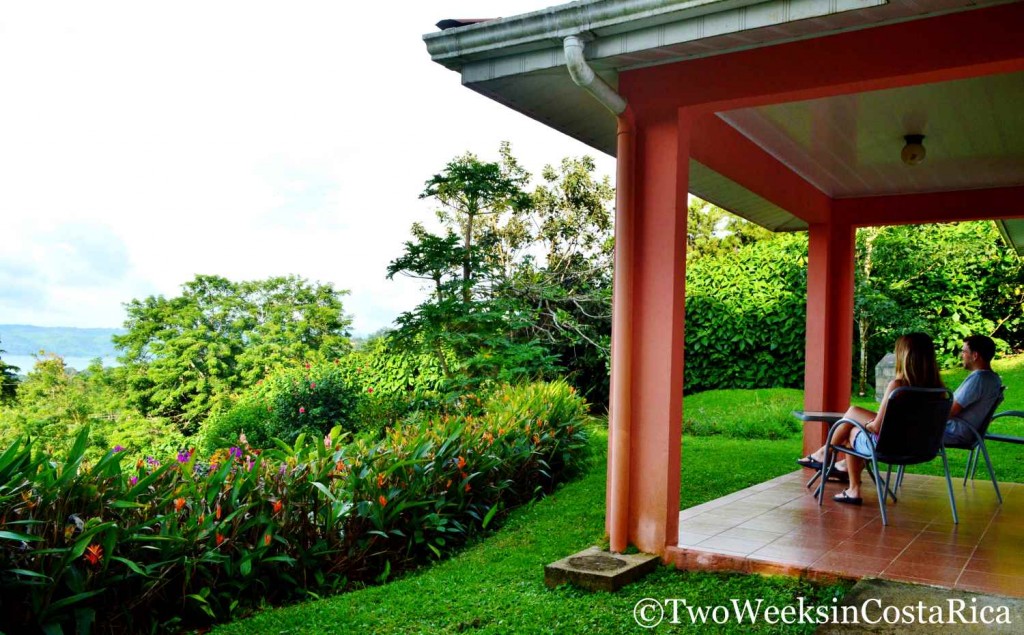
When we first moved to Costa Rica in 2013, we did five house sits that took us all around Costa Rica. We lived in a beach cottage on the Caribbean coast, a huge house in the jungle near Dominical, a charming home with views of Lake Arenal, and even a place just steps from the beach in Nosara. We took care of some great pets too, something that we really enjoyed.
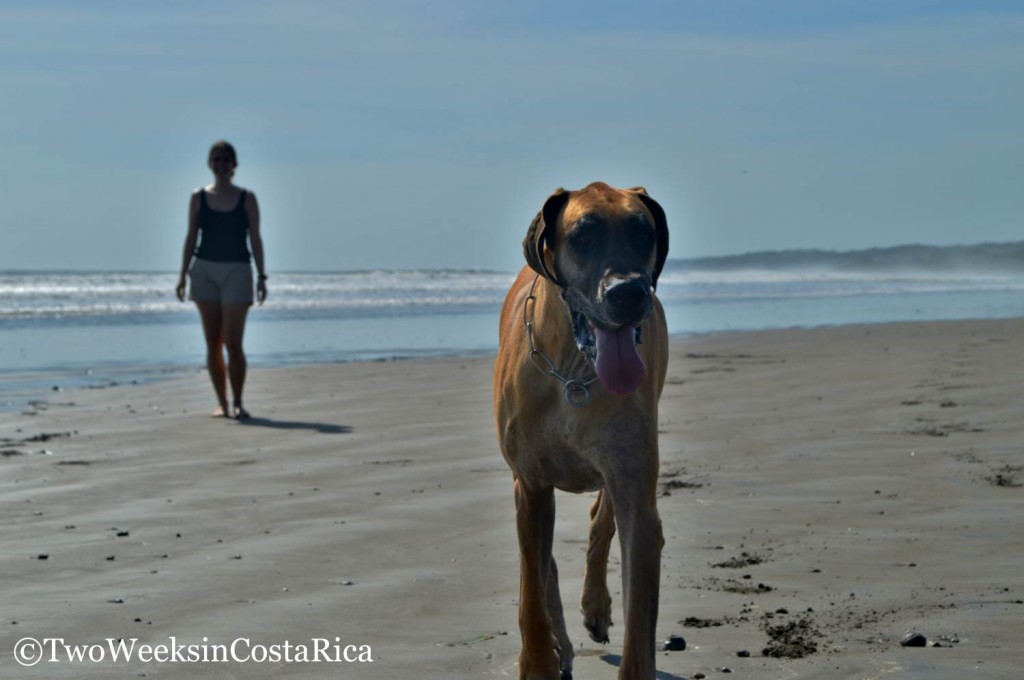
The house sits went smoothly for the most part. We had great luck with homeowners and didn’t encounter any major problems other than not having water a couple of times—but that’s a story for another day. With the exception of one house sit gone awry, the homeowners were all good at communicating when we had issues and so grateful for our help.
House Sitting Websites
When picking a website to join, the most important consideration is making sure people are actually using the site. This is one time where it’s good to go with what’s most popular.
The three biggest sites are Trusted Housesitters ($103/year), Mind My House ($29/year), and House Carers ($50/year).
They’re all set up similarly and different homeowners use them, so it’s a good idea to sign up for more than one so that you’re reaching a broader audience. We’ve gotten house sits with all of them, but the most leads came through Trusted Housesitters.
Trusted Housesitters is the most expensive of course but it also has more features like the ability to add a video to your profile and showing references on your profile page. We often directed people who found us on another site to our Trusted Housesitters profile because it had all of our references in one place, presented in a professional manner.

Once you join, you can start applying and dreaming up your next (almost) free getaway.
Whether it’s just for vacation or to live abroad, house sitting is a great way to travel. For us, it was been invaluable in helping figure out where we wanted to live in Costa Rica. When you stay somewhere for just a week or two, it’s hard to get a sense of what it’s really like, but slow traveling through house sitting, staying in one place for months at a time, really helped us narrow our search.
Regardless of why you want to house sit, it’s a great way to save money. Even doing the math conservatively, we figure that we saved at least $7,000 in housing over a year. In between house sits, we had to rent for a month or two and we paid utilities for a couple sits, but that still added up to less than $2,000 for the year—not bad for housing in paradise.
Trusted Housesitters Discount
We are very excited to have teamed up with Trusted Housesitters, one of the sites with the most house sits in Costa Rica, to get our readers a special discount on house sitting memberships.
To save 20% on your membership, just visit Trusted Housesitters using the following link: https://trustedhousesitters.pxf.io/c/4051906/1683980/18144. You will automatically save 20% on an annual membership plan. No promo code is needed.
If you purchase a membership using the link above, we’ll receive a small commission. This costs you nothing extra and actually gets you the 20% discount. We recommend signing up for Trusted Housesitters, along with the two other house sitting sites, if you’re serious about getting a house sit in Costa Rica and would make this recommendation even if we weren’t affiliates.
Have a question about house sitting? Ask us below!
Looking for more information about planning a long-term visit to Costa Rica? Check out these posts:
Planning a Long-Term Visit to Costa Rica: Covers essential topics like visas, best areas to live, transportation, and more.
Costa Rica’s Digital Nomad Visa: Learn about this new visa that allows you to stay in Costa Rica for one year.
FAQs About Moving To Costa Rica: Answers basic questions about moving to and living in Costa Rica.
What a great idea that I never thought of. Will definitely check some of these sites out!
Yeah Kelly, it’s a great way to save money, even if you’re just going somewhere for vacation. There are listings for all over the world!
Hello my name is Samuel and I want to get more I formation about house sitting ?
Hi Samuel, You should join the house sitting sites we give in this article. There are also some groups on Facebook about house sitting.
We’ve been housesitting in Costa Rica since May and we’re booked until the end of the year. It’s a wonderful thing!
I do have a question about paying utilities- how did you split them with the homeowner?
Our current house had an elderly caretaker who pretty much camped out in the backyard. The homeowners decided they needed a higher level of service so they asked us to stay for the next year.
We live in the modern house and use electricity so the utilities have doubled. The home owners seem distressed about the bill. We would be happy to chip in some but we don’t know what’s fair.
Erika, in our experience every house sit is different. It’s not uncommon to have to pay for utilities or work something out with the owners to pay for the additional usage since the extra cost is due to you living there. On the other hand if you have a lot of responsibilities like taking care of pets or helping out with maintenance beyond regular cleaning, the utilities are usually included. If they seem stressed out about it, maybe offer to pay for the additional amount. It will still be a great deal to not have to pay rent for 1 year!
Hi, my parents just arrived to Costa rica, I think its a good idea if they could housesit for a while, can you help us? This is my email address dayagracia@yahoo.com
So awesome! I think its also good to mention that when you live in a home you have access to a kitchen . . a money saver and calorie saver =) Rock on! This is such a win-win!
Good point, Becca! We cook at home a lot so it’s been great having a kitchen…and not one of those tiny hotel ones. Thanks for reading!
How did you haul your 10 suitcases everywhere? Did you store them? Did you still leave country between to renew visa?
We’re you staying in places where the weather was its worst since the homeowners left during that time?
Hi Kristen, Yes, we brought our suitcases around with us when we moved. We didn’t have kids at the time. When we had to do a border run, we tried to do it in one day. If that wasn’t possible, we would do an overnight. This was only if it was ok with the homeowners and they didn’t have pets.
Often times, homeowners do leave during rainy season. We did have house sits in September through November, when it can be quite rainy. It’s especially important to have a house sitter during those months in case of any leaks or flooding.
Thank you for the response. How did you transport suitcases with you? How soon after your arrival did you get a car? Do you still have that car?
Did you get housesitting when the weather was nice as well?
We flew with our suitcases and just paid baggage fees. This was still cheaper than shipping things and more streamlined since you don’t have to deal with customs.
We bought a car about a month after we arrived. We have since replaced it and bought several different cars, as we have been here for about 7.5 years. We have a post about that too: https://www.twoweeksincostarica.com/buying-a-car-in-costa-rica/
Yes, we got house sits in dry season also. It helped that we were very flexible with the duration of the sit and where it was.
I read your article about packing 8-10 suitcases. I feel like that would be a burden to haul everywhere. How did you manage that? Looking back, would you pack the same items? WHat would you add or delete from your list?
This was before kids when we were footloose and fancy free! We just packed up our car and moved to the next place. It was adventurous but we enjoyed it. We have a list of what we brought here: https://www.twoweeksincostarica.com/our-eight-or-ten-suitcases/
And here is a link to another post also covers things we didn’t need, and things we wish we brought: https://www.twoweeksincostarica.com/packing-for-your-move-to-costa-rica-advice-from-expats/
Thank you
Hi Guys,
Is it better to buy a car in Costa Rica rather than driving there? Why buy there? Has car buying been your biggest expense? I saw that you mentioned good clearance for a car. What do you all have for a car now?
How do you get started as a house sitter without any prior experience?
Hi Laura, It’s definitely possible to get into house sitting with any prior experience. We did it and have friends who did it as well. You may need to take house sits that are less appealing to get started (shorter, for example). We are actually on the other side of it now and have house sitters for our house from time to time. I would say to make sure to do a good job with your application (customize the message about why you’re interested) and make sure that your profile is complete, with references if you don’t have any reviews yet. You just need someone to take a chance on you, but if you’re persistent, it will happen. Good luck!
I love how much the world of “accommodations” has evolved in more recent times 🙂 Such a great thing to take advantage of since it definitely seems win win for everyone involved! A great resource of information for those looking into it!
Thanks Julie! Yeah it is crazy how times are changing. Caretakers have always been around I guess but no one thought of it as a way to see the world. Definitely makes sense though for both sides like you said.
Great article guys, I wonder if people do this is Belize – If yes, I’d def recommend it to everyone.
Thanks Lorenzo. We’ve definitely seen some housesits in Belize and have been tempted a few. Spread the word!
It is my understanding that these opportunities are very competitive.
Great article! I’m hoping to move to Paris for a while sometime next year, and housesitting is one accommodation option I’m looking at. I’ve never done it before, though, so it’s nice to hear some success stories!
Hi Molly, it really has been awesome. We’ve had good luck with all but one that we had to vacate early because we didn’t have water and the homeowners didn’t seem to care. Not a good situation! But all in all, you usually just have to deal with totally manageable maintenance issues like you would for your own house. Definitely worth looking into for Paris- rent there is so high!
What a great idea! A good way to experience life like a local! 🙂
Yes, Emma, no better way to get the locals’ perspective other than actually renting your own place…and that’s not free!
I never realized there were organized housesitter web-sites like that – I was wondering how people found these jobs!
There are quite a few sites out there, Jess, all geared towards housesitting. We had no idea either until last year. It’s nice because it gives the process a level of professionalism/legitimacy that you don’t get on craigslist and sites like that.
I really wish I had given this though before we spent so much $$ travelling Europe for a year. I’d love to try his sometime, it really seems like it has its benefits, and not just the $$ saving. Thanks for linking up to #SundayTraveler again.
It does have benefits beyond just $. It’s like we’ve been on a trip for a whole year. I can only imagine how cool it would be to do it through more than one country. Definitely useful for people trying to figure out where to live. We hear from a lot of retirees about where they should settle in Costa Rica. They visit for a week or 2 at a time but that’s really not enough time to get a true feel for a place. Not everyone’s cut out for housesitting but it’s at least worth considering before making a long-term move.
Hey currently life in Costa Rica as of 2 weeks ago. Do you guys have to leave every 90 days to the border ? If so can you give me some recommendations how I do it instead of having to return to USA every 90 days ? Thanks “:-)
Hi AJ, We applied for residency so don’t need to leave anymore to renew our visas (we do have to leave for our drivers licenses until our applications are approved, but that is a separate issue). If you are on a tourist visa, you will have to leave to renew yours every 90 days. A lot of people go to the closest land border in Panama or Nicaragua since that is the easiest thing to do. Each border crossing has different requirements, but generally you have to stay out of Costa Rica for at least a few hours before they will stamp you back in. We have more info about this in our post FAQs About Living in Costa Rica.
Incredible idea. Win win for everyone! Thanks for the insight 🙂
Definitely something worth thinking about, eh? If you end up trying it, let us know if you have any questions!
I’ve been living in Costa Rica for 2 1/2 months now, and my rent has been reasonable, but not super cheap. The housesitting idea is intriquing! I do have a question about the homes available for housesitting, though. Do they have screens and or air conditioning? Are they well sealed from Costa Rica’s insect hoards?
I had a miserable time the first month I spent here because I stayed in an almost new, gringo house near Atenas, that had no screens, no air conditioning and wan’t sealed worth a darn. Not knowing a thing about Costa Rica, I threw open all three of the huge sliding glass doors in front and settled in a chair to read. As soon as it got dark an enormous cloud of flying termites accompanied by flying ants, came surging into the house! OMG – I was terrified and must have killed a hundred of the creepy critters before I got the place cleared out. I was smart enough to let my gecko roommates stay put, but damn – I never want to have that experience again.
Eventually I learned to leave the doors shut and to turn off all the lights after dark. Nevertheless, at least 4 or 5 species of ants were able to crawl under the doors and into the house. From the look of their size and bullet-shaped heads, I’d say some of them could unleash a pretty nasty bite. I’d hardly say that 85 to 90 degrees is the “world’s best climate” either. Since there was no AC I had to make due with 3 fans pointing directly at me, all day long. The caretaker was kind enough to help me construct a bamboo framed insect net around an outdoor table so I could catch some nice breezes coming up from the Pacific.
Before I rented my next house I made sure it had screens and was cool enough to live in comfortably. What sold me on this place was all the amazing original art adorning the walls and stairways. The Canadian owner commissioned exterior and interior mosaics, original ceramic pieces and handmade ceramic sinks for this house and the guest house next door. The rent is very low, I have the use of a gorgeous swimming pool/spa complex and my own private golf cart. I also discovered that the owner was telling the truth when he assured me the house has excellent ventilation, indoor temperatures rarely climb above 75 and the house is so well sealed that only the tinies bugs make it through the screens!
Much to my chagrin, I later learned that it’s not a good idea to live in the middle of the jungle, 30 minutres from the nearest city, without a car. Buses come by infrequently and I might not have anyone to talk to for days! Fortunately there’s a small pulperia I can get to on my golf cart and I made enough friends that I can sometimes hitch a ride into town.
So what I’m asking is – don’t you have horror stories about some of the homes you were asked to housesit? I’ve heard a lot of sad tales about expats who try to build a house here and end up with crazy wiring, big gaps in the walls and/or so much humidity that the exterior walls start visibly weeping!
Despite my complaints I am fairly flexible, I speak pretty decent Spanish and I’m handy around the house. I’m not young anymore, but I’m not in bad shape. Do you think I could find a nice place to housesit? Oh, BTW, I brought my little yorkie-poo with me from the States.
Hi Nora, It sounds like you’ve had quite an adventure in the last few months that you’ve lived here. To answer your question, houses available for house sitting vary just like rentals do. So you need to know what you’re getting into by asking the homeowner. We have only lived in houses that are fully screened. Air conditioning is much less common because it is very expensive to run, and since a lot of times you have to pay for your own electricity when you house sit, you may not want to run it anyway. We have had good experiences house sitting overall, but we are very careful when screening listings. We always Skype or FaceTime with the homeowners and either see photos of the home or get a virtual tour/walk-through with them online. We did have one bad experience where we walked into an extremely dirty house that did not have water. It was the homeowner’s second home (they primarily lived in the US) and they had been trusting its care with someone while they were away. Apparently the person was not attending to it properly and it was a mess when we arrived. They paid to have it cleaned professionally and we tried to fix the water issue, but when the water problem was due to a dry well, we had to end the house sit. This was just a little blip for us, a good learning experience when you house sit for someone’s second home. Overall, though, we have had great experiences and have lived in some really nice places.
Hi Jenn & Matt,
My fiance (Joanna) and I are getting married in April 2015 and we are considering going to Costa Rica for two weeks for our honeymoon. This blog has been really helpful and insightful so thank you both for sharing your experiences!
We have a question about home sitting! How likely do you think it would be for us to find a place that we can stay for about two weeks through this option? It sounds like people are looking for at least a month of commitment or longer so we are just curious if this is option is something that we can take advantage of.
Thanks!
Young & Joanna, we have seen lots of house sits that were only a couple weeks, some even just a week here in Costa Rica. Most of those involve caring for a pet or pets while the owners are back in their home country for a wedding, graduation, operation, etc. If you are flexible with the dates and in where you want to go (beach vs mountains, Pacific vs Caribbean) that is the biggest thing. In our experience house sits here are more available in the slower tourism months (including April) then they would be in say, January, so that’s another plus for you. Hope that helps, let us know if you have any other questions and congrats on your upcoming wedding!
Housesitting is a fantastic way to travel, I completely agree! It usually ends up being a much more authentic experience as well.
Definitely Grace. Makes it a lot easier to get to know the locals and figure out how things really work in the country. It has been so helpful to us during our first year in Costa Rica.
Great article and site. Thanks for sharing! We are wondering…do you think house sitting is a realistic option for a family? We have two boys (7 and 10) who would love to care for someone’s pets, but we are wondering how home owners view this????
Hi Tonia, we know of a couple of families that have done some house sitting here in Costa Rica, so it is definitely a possibility. We’d recommend that you join a Facebook group called House Sitting World. It is a really active group with (over 4000 members) and there are people from around the globe, many with kids. This question comes up quite a bit in the conversations and it seems that the consensus is that some people are open to kids and others are not. The best advice we have seen is to be upfront about the kids right from the start and include information about them in your profile (eg: If the kids have experience with animals, have any special hobbies, belong to groups like Boy Scouts etc..) Those types of things might strike a chord with the homeowners and present a different picture of the kids than they might have in their head. Hope this helps and good luck with your search for a house!
Thank you so much for your reply and encouragement! We will try our luck….
Great info here!
My husband and I will are starting the process on making the move to CR by the end of 2016! We are very interested in the house-sitting idea. Just a couple of questions. How soon should we create our profile on some of the house sitting sites? We would like to start sitting right away when we make the move. We are just not sure of how long we should be on a site before home owners look at our profile. Also is it possible to apply for residency while house sitting? We haven’t decided weather to start the process before we move or while we are there.
thank you so much for all your info! love the blog!
Jennifer
Hi Jennifer,
Congrats on your upcoming move in 2016! We didn’t get our profile up until a month or two before we moved and even added some later on after we got here, but in general, I’d say the sooner the better. Some homeowners start looking up to 6 months out, but most in Costa Rica anyway seem to start just a few months in advance. Some of the house sitting sites also give you a boost in how you rank in search results for the longer you’ve been a member so that’s something to think about. Overall, I’d say 3-6 mos. is probably enough. Really the most important thing though is having an awesome profile- it’s great to just get private messaged house sitting offers rather than having to apply, and making your profile stand out is the best way to make that happen. Once you’re at that stage, be sure to check out our post on Building the Perfect House Sitter Profile.
One thing you should definitely do before you move is get your police report taken care of if you plan to get one (we did not but I would get one if I had to do it again). Some sites like Trusted Housesitters recommend this and many homeowners require it. It’s so much easier to get while you’re still in your home country.
On your question on residency, you can do it at any time, while house sitting in CR or from your home country.
Hope that helps! Let us know if you have any more questions.
Hi Jenn and Matt,
Great info about house sitting. I only heard about this recently.
I am retired and want to travel to other countries to experience their culture.
I kind of did that 18 years ago when I left the State to marry my Kiwi bride here in New Zealand.
Question? do you need a work permit to do this? I know some counties want to protect their citizens from foreign workers taking their jobs. ie Belize.
Let me know about this
Thanks
Rick Golden
Hi Rick, Costa Rica does have really protective laws for their citizens that make it difficult for foreigners to work. But we’ve found that most house sitting jobs in Costa Rica are unpaid–it’s more of an exchange–so it isn’t a problem. You don’t need a work permit or anything and can just come on a tourist visa. That’s what we did.
Curious about the difference between a visa and a passport. I have a passport. How long can you stay?
Hi Kurt, when you arrive in Costa Rica and go through immigration they will stamp your passport. That stamp acts as your tourist visa and they write in the number of days it is valid for. Most tourists get a 90 day visa but occasionally the immigration official will give less for a number of different reasons. So in order to stay in Costa Rica more than 90 days (or whatever you are granted) you have to check out of the country and then back in. A lot of people fly back to their home country or go to the nearest border for a short trip, either Panama or Nicaragua.
Hi,
I’ve tried applying your code COSTARICA to save 10% on my membership for Trusted Housesitters , but it says that the code has either expired, or is incorrect.. Is there another code I can enter?
Hi Maja, Hope it isn’t too late. Trusted Housesitters took a while to get back to us about renewing the code for 2016 (I guess it expired automatically at the end of the year), but it should be working again now. Let me know if you have any problems.
Just wondering if you are still house sitting in Costa Rica?
Hi Laura, Yes, we are. We have a long-term caretaking position in the Southern Zone, which is great because we don’t have to move around anymore. Traveling was fun but exhausting!
Have you come across any house sitting ads that permit pets? I get that this is super situational, but was wondering if you personally have seen any. My husband and I are wanting to relocate next year, and I definitely never considered the possibility of house sitting.
Hi Becky, I can’t recall any listings that specifically allow pets (listings tend to be more vague) but definitely know of homeowners who are okay with animals. One couple we know house sits at a property with their 3-4 rescue dogs. In general, Costa Rica is very pet friendly from an expat perspective (lots of people adopt strays) so you would just have to find the right person. We’d say to look for listings where the homeowner seems more flexible and propose it in your reply. You should also put it in your own listing in case a homeowner contacts you without putting up an ad.
Hello, all of your articles are super informative and encouraging! My wife and I are thinking about moving to costa rica for a few years after our house sells later this summer…this house sitting deal interests me a lot! We do however have 2 kids (age 3 and 1). Would that be an issue when applying for house sitting?
Hi Marcos, We answered this question for a reader above. Check out our response to Tonia on Jan. 23, 2015. I’ll add to that that since then, we have heard from families who house sit in our area that a lot of homeowners actually prefer families because they’re less likely to have parties and trash the house. Makes sense if you think about it. Good luck with your plans!
Jenn and Matt, which visa applies for house sitting in Costa Rica? I know about the rentisista and the bank deposits. Can one move to Costa Rica on this type of Visa and house sit? You mention this is a great way to see different parts of the Country before committing to a certain area before retirement. Great info BTW.
Hi Paul, There is no specific visa that applies to house sitting. You can come on a tourist visa since there is no exchange of money and you’re technically just visiting, but you would still need to leave the country every 90 days to renew your visa until you decided to apply for residency. We have more info about how that works in our FAQs About Moving to Costa Rica post.
Coming to Costa Rica in August. I had heard about house sitting in a YouTube but didn’t know it was somewhat organized. Thank you for this website.
You’re welcome, David!
Jenn and Matt, Thanks for all you do, My wife and I are considering a move to Costa Rica for retirement, and have been there 4 times in the last couple years. We are a little skeptical and wonder if you think house sitting would be viable for 50 somethings? Spending time in the “Southern Zone” is where we think we’d like to settle. As you said spending a couple months instead of a couple weeks may give us better picture. I guess the need of a vehicle would be a concern as well, any thoughts you have would be helpful. Go Sox
Hi Dave, Great to hear from you! Yes, house sitting would be a good way to spend a solid chunk of time here to really try it out. We actually know of some couples in their 50s house sitting in the Southern Zone so it is definitely possible. Some home owners prefer mature house sitters because they think they’ll be more responsible. A car would be something to think about, but sometimes you can work it out with the homeowners to use theirs. Rental car rates are cheaper by the month anyway if you got stuck, and if that was your only big expense, wouldn’t be all that bad. We’d recommend trying to time your stay with the rainy season because that’s when there are the most opportunities. Also, get your listing up at least a few months in advance of when rainy season starts in May. Hope that helps!
You guys are livin the dream! I appreciate you putting your story out there, and for making it easier for a guy like me to make this happen!
It’s our pleasure, Dominique. Hope it all works out for you!
Hello:)
My husband and I plan on moving to Costa Rica and definitely looking into trusted house sitters since we saw your blog a while back. I will definitely be going through all of your recommendations. My concern is about having to leave every 90 days . Where do you go? We plan on having a baby in about a year. While your pregnant do they also make you leave every 90 days?
Hi Stephanie, We traveled a lot when we first got here and spent some time in Panama (the Bocas, Panama City, etc.) and Nicaragua (San Juan del Sur), but now we usually just go to the border for the night, do some shopping, and turn back. We’re only about 2.5 hrs from the Panama border so it’s not that bad, but it is kind of a pain if you’re farther away. There are no exceptions if you’re pregnant, unless you have a doctor’s note I think. My 90 days was up around my due date with my son last year so we did our border run early that time. The good thing is, if you decide to have your baby here, that makes getting residency a lot easier if you want to stay long term. Best of luck with your plans!
Thanks for the informative website.
You’re welcome, Wes.
Hello, I am a 61 year old, young at heart, healthy, older female nearing retirement. I’m wondering how safe house sitting would be for a single women in Costa Rico or some of the other places you have been. Also, I don’t speak Spanish would this be a barrier to house sitting? I am hoping to live out the rest of my life in a less stressful place where I can enjoy myself.
Hi Kathy, Costa Rica is a pretty safe country so I think you would do just fine here. The more rural areas are quiet and peaceful and sound like what you’re looking for. Since you would be by yourself, you might want to look for an area with an expat population, if you don’t speak Spanish. Home robberies don’t happen often, but it’s still a good idea to have some neighbors close by just in case.
A little Spanish is good to have so that you can communicate with the gardener and other maintenance people, but I don’t think it’s a barrier. When we first got here, we spoke almost no Spanish and got by ok with our Spanish phrase book and a lot of patience. Hope you find a nice place to settle down!
I just had to comment on your question. You sound just like me – 61 years old, on my own, soon to be retired, and wanting to travel more, in an economical way. DI don’t speak Spanish either.
Did you have any luck finding a place?
Great info, thank you! As for medical care and some of the American amenities, where do you think the best place in CR would be to live? What part of CR do you like the best?
Hi Scott, The Central Valley is closest to San Jose, where most of the good private hospitals and best shopping is located. A few towns in that area that are popular with expats are Grecia, Atenas, Escazu, and Heredia.
We like the South Pacific Coast the best because we love the beach but can live in the mountains to escape the heat. Certain things are a lot less convenient though. We have to drive 45 min to get to the nearest city with decent shopping. You might be interested in our Where We’ve Lived post, which describes the eight towns we have lived in in CR and what we liked and didn’t like about them. Cheers!
Do you think there are ever people who would consider a couple with a dog to house sit? I know dogs are great deterrents for burglary. We would love to do this, but we have an awesome bull terrier. Seem possible?
Hi Lori, The short answer is yes. We have actually answered this question before. Scroll up to our response to Becky on May 11, 2016 for more. Thanks!
Hi! I want to house sit close to friends in Chimrol, Revas, outside of San Isidro for three months maybe longer. As it is location limited how do I get the word out?
Hi Ramani, Your best bet is to post in local online newsletters and in Facebook groups for the SI area that you’re looking for something. One popular online newsletter is Chayotevine, your friends probably know of others and can help with Facebook groups to join. Good luck!
You said that you guys started planning your move to Costa Rica about 2 years prior to the move.
I recently decided I’m on a 2-year plan before relocating from FL, and I want to learn as much as possible before going (alone).
This house sitting sounds like a great idea, even if it only lasts for the first few months. However, I read that the initial visa is only good for 90 days. Did you guys get permanent visas before house sitting for a whole year? Was your very first year of living in Costa Rica when you were house sitting? ALSO, with having 2 years of planning, how soon did you join the house sitting sites to get that locked in place? I mean, obviously I wouldn’t start a membership now if I’m not looking to move for another 2 years….
Any and all information would be greatly appreciated!! Thanks for your article 🙂
Oh, I have another question: I will be bringing my dog with me in 2 years…..
You mentioned that some of the homes you cared for had pets. Is there an option on the house sitting sites on your profile to add that you have a dog you will be traveling with, so that they can decide if I would be a good fit to watch their home?
Thanks!
_Sara_
Hi Sara, That’s exciting that you’re planning a move! You should read our post, FAQs About Moving to Costa Rica, which will answer your visa questions. We were here on tourist visas for our first couple of years and applied for permanent residency last year through the birth of our son. Our FAQs post explains about tourist visas.
We cover when to put up your ad on the house sitting websites in our post, House Sitting in Costa Rica.
And as far as we know, there isn’t any special way to tell homeowners you have a pet, but of course you can write it in your profile. We haven’t been on the sites for about a year, though, since we have been long-term caretaking, so something could have changed. Best of luck with your plans!
I see no posts after March of this year, is all still going well. My wife and I are starting on the same journey in Costa Rica in April of 2018. We want to be in the Southern zone only. We are here now looking.
Hi James, This is an older post so we don’t get quite as many comments on it as we used to. But, yes, all is going well still. We have been in Costa Rica for more than 4 years now and are caretaking long-term at a property. You can read our 4 Year post for the full update. Best of luck with your search. There are a lot of house sits in the Southern Zone so your odds are good.
My wife is retiring in March of 2018 We want to see if we can find a home to sit for April. Please suggest where we start now. We want to go to the southern zone near Uvita from 3 to 12 months based on what we find as a house.
Hi James, We had the best luck finding house sits near Uvita using Trusted Housesitters so I would start by making a listing on there. You could also post that you are available for house sitting starting next April on some of the local Facebook groups and see if you get any hits. There is a new group called CR Southern Zone Long Term Rentals or the more general Costa Ballena Bulletin Board.
Great post and website!
Just curious how open people are to housesitters with kids? Like 3 kids, to be specific. Think we’d have any luck?
Hi Abram, Some homeowners are willing to take families, thinking you are less likely to party. Others will prefer no kids. But we do know of families who house sit so it’s definitely possible.
Hello! I just came across your site and have been trying to catch up on reading all the posts. Thank you for all the information you provide!
I’ve never been to Costa Rica, but am now feeling very inspired. Is Trusted Housesitters still a site you would recommend trying, and do you suspect there might be a possibility of housesitting in or around Samara?
Hi Rhiannon, Yes, we definitely still recommend Trusted Housesitters. There are usually quite a few listings for Costa Rica on there. Samara has a decent size expat population so opportunities probably pop up. If you widen your search to include other towns, you will have the best chances of finding something. Trying to find something in one specific town can be tough unless you live there and know people.
Hi guys, your blog is brilliant. We are a couple in our 30s from London who have quit our jobs in the rat race and are following a similar dream to yours. Have to say you are an inspiration! Pura vida
Villa Hermosa Arenal is looking for a property manager
Thevillahermosa.com
Hi there… my companion arrives in costa rica on the 31st and we would love to house sit but only for a couple of weeks…
Do you know a way to get a one time housé without making a profile and membership?
Online skype interview etc?
Hi Nacho, Getting something lined up last minute will be tough. You could ask around in the town where you’re staying now to see if any of the locals have a lead. This is the time of year when a lot of expats leave Costa Rica to visit family back home so you never know.
We will be around Costa Rica and Panama for 3 months so we are open to consider any housesitting offers throughout..
Thank you 🙂
Nacho and Bracken
May be a dumb question, but do house sitters get paid something other than free rent?
Hi Dan, Not a dumb question at all. Most house sitters do not get paid. It’s an exchange- free rent for taking care of a house/pets. An exception is very short term house sitters. If people are leaving for a week or less, a lot of times, people get paid for that.
retired and can travel ,willing to house sit any time with a two week notice for airline ticket.
Thank you so Very Mucho for this house sitting blog / post.
Pura Vida~ Joan
Hi! We have traveled to Costa Rica a few times over the year and really love it and considering moving here. Do you think we would have a hard time house sitting with children? We have a 4 and 1 yr old. Thank you!
Hi Jeannette, We know of a lot of homeowners who are fine with house sitters with kids. We also know of a lot of families in our area who house sit so it’s definitely possible. Good luck with your plans!
Great post! I’m currently living in Brasilito, Costa Rica and would love to house sit. My only hesitation is that my partner and I have a dog and a cat. Do you know if homeowners typically allow their housesitters to bring pets along with them? Thank you!
Hi Mike, It might be harder to find homeowners who would let you bring your pets, but not impossible. We do know of people who have done this but it has to be just the right fit at a place where the homeowners’ pets are okay with other animals.
Great post, thank you for sharing. Are you still house sitting or have you settled somewhere? I want to move to CR, but not sure which area yet, am thinking of using house/pet sitting as a way to get a feel for different areas.
Hi Tera, We just stopped care taking earlier this year and now live near Jaco on the central Pacific coast. House sitting is definitely a great way to get a feel for the different areas!
My husband and I would like to house sit we have two dogs that have been professionally trained. Do you think we could find a place with two dogs? Thank you Kim
Hi Kim, We know of people who house sit with their dogs so it’s definitely possible. You just have to find the right homeowner.
Thank you for this great information. I enjoyed reading your other posts. Since it’s been five years since your move, is most of this information still current? Specifically, has the WiFi gotten better and in more locations? We are considering the big move and don’t want to live in tourist area and we don’t need the beach, but do need to be within reasonable distance to healthcare facilities. We like the idea of Central Valley and Southern Pacific. Do you have any suggestions of cities that are not too remote?
Hi Diana, The information is still accurate but internet has gotten better in general. Specifically in the Southern Zona, Uvita has more cable internet than five years ago but it’s still not everywhere by any means. You can get it close to town and some of the mountain roads have it. Some better options for WiFi Internet have come out too but whether you can get them depends on where you live. Uvita is down by the beach but thought we’d give that to you as an example because we know it well. You might like somewhere on the way to San Isidro like Platanillo or in San Isidro itself, which has great internet. The Central Valley would be the best option for good internet. Lots of choices for areas there. It’s hard to give a specific recommendation without knowing more about you but Grecia and Atenas are popular and Santa Ana for something closer to the city. Hope that helps. Best of luck with your plans!
Hi,
I was considering house sitting all over the world for a while but I have a small dog and I knew I could not drag her all over the globe with me so I didn’t pursue it further. However, since she will already be in Costa Rica with me I could just bring her with me. But, I was wondering if it would be impossible or merely difficult to find house sitting jobs where I can bring my little, well behaved dog with me. Since I haven’t completely decided where I want to live, this might be a great solution for me. What do you think? Are you still doing house sitting with your kids? Has that been a challenge?
Hi Bev, Lots of homeowners are okay with house sitters coming with pets, you just have to find the right fit. We were long term caretaking up until 2018 but it was in one location the whole time so didn’t have the same challenges as short-term house sitting. We are just renting now.
In the midst of Covid-19 how are Visa’s being handled/renewed as a tourist after 3 months (i.e. Visa run)?
Thanks
Paul
Hi Paul, Right now since land borders are closed to tourists entering Costa Rica, you need to fly out of the country to renew your visa. There is an exception for people who entered before December 1st. Their visas were automatically extended until March 2. But that doesn’t apply after that date. We have lots more information in our post Traveling to Costa Rica During Covid-19.
I used Trusted Housesitters a few years ago and had a great experience as a homeowner with pets, but the annual fee has gone up a lot since then ($129. a year for a home owner) and I am wondering if, in your experience, they are more reliable and do better vetting than Mind My house and others? I have only used Trusted House Sitters so can’t really compare.
Hi Susan, I don’t think they necessarily do a better job vetting house sitters, but they do seem to have the most selection of house sitters. Their process of being able to see actual reviews of people can be useful too. But Mind My House is a good site to use as well if you are able to find someone on there.
I have seasonal allergies in new england, mold is 1 of my triggers, so was wondering how I would fare in Costa Rica’s climate?
Also what is the water quality, and is it mainly wells in rural ans municipal in urban area’s ?
thanks
Hi Michelle, I have mold and other seasonal allergies too. The worst times for me are dry season when all the flowers are blooming. In rainy season, houses can get quite moldy so you may want a place where you can run the AC periodically to get some of the moisture out. Overall, though, my allergies are much better than they were in New England.
Almost all water is municipal through the Aya. They test it regularly and it’s good in most places but not all. Some areas have minerals or other naturally occurring substances that can be bad if consumed over a long period of time.
I travel with a medium sized service dog. I am wondering how big of a problem that would be in housesitting. Do listings indicate if the house sitter can have animals?
Hi Jay, Some homeowners are fine with animals so it would just be a matter of finding the right fit. Usually if pets are out of the question, a homeowner will note that in a listing.
Perhaps it’s too quiet around here to get a response, but thought I’d give it a shot…. My family is planning a trip to CR basically 25/11 – 13/1 (7 wks). We’re two adults and our boys are 4 and 1. I’m liking the idea of housesitting, but also afraid we wld be tying ourselves down to a specific location w/o the option to spend a nite or two anywhere else. Any thoughts/experiences?
Is there an “ideal” length of time homeowners are usually looking for?
Hi Paul, We actually offer our house now for house sitting when we take a trip (some time has passed since we wrote this article). From the homeowner perspective, I would recommend thinking of the house sit as somewhat limiting if you’re planning to do it as part of a vacation. It will depend on the house sit but usually people want you at the house for a good chunk of the day so that can be limiting with doing activities. Those dates are high season too so it may be harder to find something.