
Right before we moved to Costa Rica, we did a post about what we were bringing. We itemized the contents of each of our eight suitcases (yup, that’s all we brought!). Now that we’ve been in Costa Rica for nine months and have a much better idea of what we actually need to live here, we thought it was time for an update. To get more opinions, we also asked four other expats who recently made the move. This post will share our collective advice on what we brought that we didn’t need, what we brought that we use all the time, and what we wish we had brought.
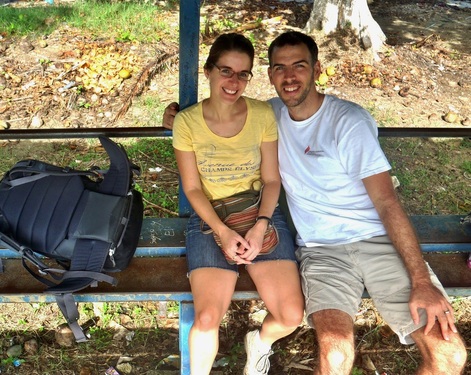
Us (Jenn & Matt)
What we brought that we didn’t need: blender (every place we’ve lived has had one); nice clothes (it’s so casual here we seldom dress up beyond a cotton dress/polo shirt); hairdryer (it’s so hot Jenn almost always air dries); bathrobe; dressy shoes/heels; anything leather (molds like crazy).
What we brought that we’re so glad we did: nice pots and pans (difficult to find quality ones); camera, cell phones, computers (electronics are very expensive); quality knives; nice beach towels; our favorite shampoos, bath, and skin care products; sunscreen (very expensive here); shaver refills; hiking boots; headlamps; basic tool kit; electronic copies of all important documents.
What we wish we brought: more Advil (sold by the pill in CR) & other over-the-counter meds and vitamins; Space Saver bags (great for storing extra clothes/prevents mildew); a good quality non-stick pan; silica packets for camera dry box or sticking in suitcases (prevents mold/moisture); back-up hard drives; lightweight hats for sun protection; tire repair kit for car; office supplies; snacks (especially nuts like almonds); peanut butter; beer cozies (gotta keep the Imperial cold! These are very overpriced in CR).
Here’s What Other Expats Had to Say
Samantha Wei
Samantha is co-founder of a leading travel blog in Costa Rica, My Tan Feet, which she founded with her boyfriend, Yeison. She lives in Playas del Coco.
When I moved to Costa Rica, I brought two full suitcases with me. Luckily I didn’t need to bring home or kitchen items as my future home was already furnished by my boyfriend. However, we ended up moving from the mountains to the beach two weeks after I got there so my wardrobe was a bit ill fitting since I brought colder temperature clothes.
Some things I brought but didn’t end up needing are: boots, robe, my point and shoot camera (my boyfriend had a much better one), a Spanish textbook (I found online software to be more helpful), my nail polish (they all dried out), heels and flats.
Some things I wish I brought: more framed pictures, a wireless mouse, a laptop fan, more Chinese sauces, food and snacks, a more durable water bottle, a day bag, a phone protector, an epilator, running shorts, hiking sandals and a poncho.
Some things I was happy I brought: my Nintendo Wii, sunglasses, visor, my external hard drive, iPod, my beach tote, a good spatula and lots of hair ties.
I guess most of the things you can attribute to not being prepared for a beach life and finding out that electronics are much more expensive in Costa Rica. I found out my wardrobe became much more casual living at the beach and didn’t end up needing several of my clothes that were more formal.
One thing I wish I brought the most? My puppy! Unfortunately she is a pretty big dog and it wasn’t worth taking her away from my parent’s house to fly 3000 miles to a very hot environment. At least in Coco there are plenty of dogs that I can play with at the beach!
Haydee Stuart
Haydee Stuart has been living in Santa Teresa, Costa Rica since 2011. She was the co-founder of Pollo Pass, a fun and informative online-resource guide specializing in Costa Rica.
Almost three years ago I quit my job in Los Angeles and decided to pack (almost all) my stuff and move to Costa Rica. Since then I have gone back and forth a number of times and looking back on that first move I had it (almost) all wrong.
Of course being a female, the majority of my luggage was packed with clothes. Shorts, tanks, bikinis, dresses, jeans, leggings, sweaters, you name it, but needless to say I over-packed, or better over-dosed, on clothing. Instead I wished I had packed more quality sheets and/or towels, which are hard to come by here. In addition to a plethora of clothes was also my mound of makeup & variety of shoe options, both in the end turned out to be just excess baggage weight. Don’t get me wrong, I like being “made-up” but in this weather I am lucky if my deodorant stays on let alone my eye shadow!
As far as the shoes go, depending where you plan on living/visiting I would suggest investing in nothing more than a few pairs of flip-flops and “fancy” sandals and 1 pair of sneakers. In lieu of hefty shoe options that you won’t wear, bring a few of your favorite can’t-live-without beauty or hygiene products to avoid missing them and/or paying double. Mine included a leave-in conditioner/detangler, face wash, razor refills and of course sunscreen, lots of it!
Although the multi card reader I brought has been awesome to grab pictures from new friends along the way, I am kicking myself for not bringing an external hard-drive and extra cables/chargers. I have had to buy all of these things along the way and my wallet is not too happy about it.
Lastly I can recommend for anyone moving to Costa Rica to toss one luggage bag and instead opt to pack your stuff in a cooler. This is one of the best things I did (the 3rd time around). Not only does it protect your stuff, it also is great for beach bonfires, BBQ’s and triples as a table while on the go!
Jen Seymour & Greg Seymour
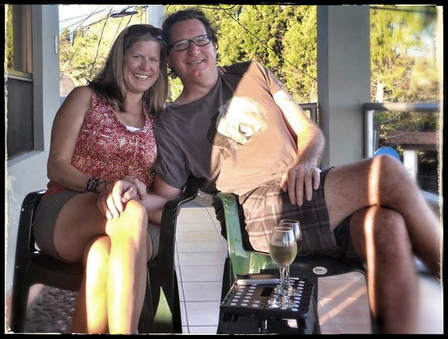
Jen and Greg Seymour moved to Grecia in June of 2013, after quitting their jobs and breaking free of the rat race in North America where “bigger was better.” You can find Jen and Greg at their blogs: Costa Rica Chica (Jen) and Costa Rica Curious (Greg).
Things we brought, that we’re so glad we did
Jen Seymour
When we moved here 9 months ago, we only brought 9 pieces of luggage with us. This was all we owned at this point, after selling our houses, cars, toys and furniture. We spent a lot of time planning exactly what we needed to bring with us, and even though we knew we wouldn’t think of everything, I think we did a pretty darn good job.
The best things we brought with us when we moved here were our apple products. Greg and I have an apple family – we both have iPhones, iPods, and Mac laptops, and I also have the iPad Mini. The iPhones are great, as we unlocked them in the States and got SIM cards here with minutes to use as local phones, we just re-load them when we need to, about once a month (and at only $2 a pop!). We can iMessage or Facetime our friends and family for free. For me, one of the best gadgets on the iPhone is the camera – I use it ALL the time when I’m out and about. It’s so easy to whip out and get to the camera really fast, and it actually takes really good pictures. The iPad Mini is also great, and I mainly use it as a reader with the kindle app. We are both avid readers, and Greg has an actual Kindle which he uses. We don’t have a TV here, but we watch movies all the time on our laptops – which works out great. We don’t miss having a TV at all! It’s much nicer to take a walk outside or sit on our front patio and watch the world go by.
Other items we brought, that we use all the time:
Clothing: flip flops, hiking boots, crocs, tank tops, sun hats and shorts. I also wear skorts (a skirt with shorts built in underneath) ALL the time – I love them! So comfy and functional too.
Drug Store: Ibuprofen, Excedrin, Nyquil (and other cold/sinus medicines), Pepto-bismol, Band-Aids, Neosporin, good razors for shaving. And lots of sunscreen – sunscreen is very pricey here and is definitely something you need, Costa Rica is only 10 degrees from the equator.
Kitchen Products (note – I love to bake!): Kitchen Aid Mixer, coffee pot, crock pot, coffee grinder, food processor, dutch oven, a good knife set and Silpats (non-stick baking mats).
Other miscellaneous items: Toolbox with some general tools, batteries, yoga mats, back packs, umbrellas and reusable shopping bags (since we don’t have a car, these work great for toting groceries on the bus). Oh, and last but not least – The Executioner, an electric tennis racket. With the touch of a button, you can swing and zap those pesky Costa Rican bugs!
Something else that didn’t fit into any of our suitcases, but we brought anyway: our sense of adventure and our sense of humor. Both of these things have helped us tremendously to adjust to Costa Rica and live here happily. Trust me, when I say – these are two things you ABSOLUTELY need to survive here.
Unnecessary Evils
Greg Seymour
Imagine that you were stranded on a deserted island and you had to live the rest of your life with just 9 suitcases worth of stuff – what would you regret taking?
Ok, so we aren’t stranded and Costa Rica is not deserted and everyone knows it is not an island. Right? We did, however, move here with only 9 suitcases and while we did a great job of managing the number of suitcases and their weight we did manage to bring a couple of things that we just do not need here:
1) The Weighted Hula-Hoop – I know what you are thinking, “you are moving to Costa Rica, how can you not bring the weighted Hula-Hoop?” Well, we did bring it and I after I put it together (oh yeah, in addition to being weighted, it tears down for easy travel) it sat in the corner just waiting to be twirled. My wife protests that she has indeed used it and that it has some value here and it is fine, really, as long as she dusts it once a month or so.
2) The Bug Net – So this one may be useful, one day. Currently we are up in the mountains of the Central Valley and while there are bugs, it is not buggy like down by the beach and in the rainforest. Essentially, the bug net is a hoop that you hang from the ceiling and it drapes a net over your bed to create a barrier between you and the pests. It is bad enough that we brought the net and don’t use it, but worse than that is this is not our first net. Yes, we bought 2 nets that we don’t use. Luckily we only packed one. It was impossible to pack the first one because its hoop was too big to fit into any one of our suitcases. Oh yah, it was not returnable to boot – some lucky shopper at Goodwill in Dallas will love this once they figure out what it is.
3) Landline Phone Handset – We had actually thought this one through. Before we left the States we set up a Dallas phone number with Magic Jack and paid for the VOIP service for 5 years. In order to use Magic Jack we were required to, we thought, use a landline phone. So we brought 2 phones, a cheapie corded phone and a cordless phone with a base plus 1 additional handset. So we were prepared – the problem was that Magic Jack did not work so well with the old-school phones and we ended up finding and installing the Magic Jack iPhone app on our cell phones, and this worked Magically.
So even after over a year of thought going into our move, we still brought a couple of things that should have stayed in Dallas. Overall though, we did a phenomenal job of downsizing from an upper-middle class lifestyle and all its trappings to a much more simplified life.
Anyone need a Hula-Hoop? It is weighted and it disassembles for travel and, more importantly, storage.
* * *
Muchas gracias to Samantha, Haydee, Jen, and Greg for sharing their experiences. We hope that this post is helpful to those people trying to figure out what they need to bring to Costa Rica.
Questions/Comments
Have you made the move to CR? What tips would you give to people about to take the leap?
Thanks guys for letting Jen and I play along.
It was great reading what everyone else brought when they moved, I found myself saying, “oh, man what a great idea” a couple of times.
It was great having you contribute, Greg. We felt the same way. Haydee’s cooler idea was brilliant.
Is it hard to get residency. Thanks Sue
Hi Sue, That’s a really broad question. It’s not hard to get residency if you fit into one of the eligibility categories, but there is a lot of paperwork involved. For more information, read our posts FAQs About Moving to Costa Rica and Applying for Residency in Costa Rica Without a Lawyer.
Don’t know if this site is still active but I will be coming down in the fall and would like to bring some housewares to upgrade my son’s property. Is there duty or customs for bringing in some pots and pans, dishes, etc. My son says replacement items are difficult to find along the east coast.
Hi Sheila, If you bring the items in your luggage, they are considered for personal use and you don’t have to pay a duty on it. It’s when you have things shipped into the country that there is a tax.
Thanks! Great article! My wife and I are relocating in November. I did not see where anyone mentioned bringing down a printer. Are HP Ink Jet printers readily available in Costa Rica? Or should we bring one with us?
If you decide to bring your printer from the US don’t forget to bring lots of Ink Cartridges. The ones sold in Costa Rica will be not work in your printer brought in North America.
Steve…. we just moved here permanently in March 2014. After visiting 4 times and spending 6 months here last year to make sure, we took the plunge….sold everything, and came with 9 large suitcases, and our carry on luggage, computer case, etc.
We brought much of the similar stuff these folks mentioned, and my husband brought our HP printer along with us. It’s lightweight and, as most folks mentioned, the electronic stuff can be a bit pricey here.
Hope that helps. Jeanie Kunerth
HI, We are coming down next month. Will they question or tax if you bring a large amount of suitcases with household goods? Like 6 -7 for 2 people? Also, do they have decent pots and pans now at Walmart or PriceSmart or is this still something we should bring with us? We already plan to bring towels, sheets, knife set and other household goods. I also see tools as a popular item to bring, do they carry things like that at PriceSmart? I ‘ve heard it compared to Costco and Costco seems to carry everything, even furniture. Thanks for the help!
Hi Teresa, They probably won’t question you about 6-7 suitcases. People bring that much all the time of random items. I am not sure the border will be open by next month, though.
Walmart doesn’t have great pans. Sometimes Pricesmart has decent ones but it depends what you’re looking for. I think I’ve mostly seen non stick. I would bring my own if you want stainless steel.
PriceSmart has a very limited selection of tools. Not much really so we’d bring those too.
It’s a bit of an exaggeration to say that they carry almost everything. The household items come and go, sometimes they have some smaller pieces of furniture but we’ve never seen couches or anything like that. There are good furniture stores, though, like Ashley. Hope that helps!
Thanks for all the write-ups! I’m gaining much needed knowledge into moving to CR with all your input. Thanks for taking all the time and effort to post these.
Dawn
Our pleasure Dawn!
Jean and Matt, thank-you for your informative post. I am a divorced, single retired school teacher of 68 years. I desperately feel a need to change my life but am concerned about making this move alone. Also, are visas only good for 90 days? Do expats do an exit turnaround to get by this?
I would really appreciate your input and assistance in helping me with this life changing decision. Many thanks and look forward to hearing from you. Regards, Jacquelyn
Hi Jacquelyn, It is a big life decision so you are smart to approach it with caution. Not sure if you have explored our website yet, but we have a lot of articles about what it is like to live here in our Life in Costa Rica section. You should also read our FAQs About Moving to Costa Rica post, which will answer your questions about visas. Let us know if you have any more questions or concerns as you get further into your research. Best of luck!
Hi Jacquelyn
Have u moved ti CR yet?
Where? I am coming May 12 for a scouting visit with hopes of relo.
We have much in common, same age, almost, lol, retired, divorced . I have had it with Florida 13 yrs looking for new adventure. I hope to hear from you
Thanks
Phyllis
Hi Jacquelyn, my name is Peggy and I was wondering if you had moved to CR. I am 66 and been widowed for a year and I too need a change. My problem is I have four dogs that I would bring with me. Husband and I discussed moving there but with his illness it wasn’t an option. Would love some feedback.
Really helpful post! I’m moving to Costa Rica in May, so have an idea of a few extra things that will be needed in my suitcase ~ including peanut butter!!
Thanks Charlie! Just make sure to wrap things like peanut butter in plastic bags too. We had some friends arrive last week with a burst container and some delicious smelling clothes.
What a great post! Hard to fit your life in a mere eight suitcases. You definitely should not have given any Imperial beer cozies away.
We’d like to think our old cozies are getting plenty of use back in Beantown. We left them in good hands 🙂
Does PriceSmart or Wal-Mart have OTC drugs like ibuprofen in larger quantities?
Roberta, we haven’t lived near San Jose yet so haven’t explored PriceSmart. The Maxi Palis (Walmarts) near where we have lived don’t have larger boxes or bottles of ibuprofen on the shelves. They usually have a pharmacy counter and ask you how many you would like (per pill). You can buy the whole box but they just multiply the price by how many are in the box.
We made our first trip to PriceMart this weekend! The do carry larger quantities of Tylenol, but nowhere near the size found in the US, and prices were considerably higher. That’s the only one I remember seeing…best to bring your own when you come. And coolers are SO expensive!!!
There’s your answer everyone! Thanks for letting us know what PriceMart had, Jana. Great timing.
We built our new home in Valle Pura Vida near Manuel Antonio. We haven’t been able to make the move permanent, because my wife isn’t quite ready, and we have some court cases pending in the US. We spend about 1/2 the year in each place. I like the fact that we can bring that 3rd suitcase each trip, stuffed with Home Depot tools, window tint, and other “stuff”. Garden supplies and spare parts for our Hilux also fill the case.
Hi Pat, that’s a good way to get your stuff here. We’re planning to bring some stuff back and then fill the suitcase with new stuff when we go back to the States later this year. Enjoy Manuel Antonio!
We’re moving to Costa Rica in a couple weeks and this post was really helpful! I get really bad migraines so I’ll have to stock up on pain medication before we leave.
Katie, glad it was helpful. Good luck with your move!
Hi! We just moved to Costa Rica in August 2013 and have loved our time here! We are currently living in Grecia! It’s always hard to know what to bring but we came with the bare minimum. After selling all our things, we came with 2 suitcases and 2 small backpacks! We agree about the printer, such a pain to go into town to get everything printed. We are considering bringing one from the States as well. Thanks for sharing!
Landon
My husband and I bought a home here last year and and try to come for 6 weeks every 2 months. One of the first things that I brought here was aa HP printer. When I tried to get ink cartridges for the printer I found that the printer wasn’t sold in Costa Rica, therefore no ink was available. The one I brought from the States was a WiFi 3 in 1 which cost about $70.00. I ended up having to buy a comparable printer which about the same cost, but wasn’t WiFi. Moral of the story is that if you bring one, make sure that you can get ink here or bring a supply with.
Greeting from Tango Mar, Tambor, Costa Rica.
Hi Landon, Wow, we are almost on the same schedule as you. We moved in late July last year. Fitting everything in four bags is definitely impressive. We’ve narrowed ours down a bit and hope to rid ourselves of another suitcase or two on the next trip back to visit the States. Less is more right? Thanks for reading and keep enjoying paradise!
This was so helpful! Thank you to everyone!
Quick question. Almost everyone mentioned external hard drives. This is not something I ever use in the States, is it something we really need in Costa Rica?
Thanks!
Kira
Hi Kira, Electronics tend to fail in Costa Rica so it’s good to back up everything. We have a backup to our backup because our photos are so important for our website. In a lot of areas, the internet is slower so backing up to the Cloud takes forever so that might be another reason people use them here.
This article was written in 2014. Is the information in the article still relevant? We are visiting in March. Considering a move in the near future. We sold almost all our belongings and moved to Grand Cayman many years ago with our ten-year old daughter. Unfortunately a category 5 Hurricane (Ivan) moved us back home a year later. So, we’ve done this kind of thing before. Looking forward to visiting CR and hopefully making the move for good this time! Great article!
Thanks!
Hi Vickie, That’s a bummer about having to move back because of a hurricane. Costa Rica seldom experiences hurricanes so that shouldn’t happen to you again. I just reread the article, and yes, everything still applies. Electronics and sunscreen are still expensive, good quality pots and pans and sheets and towels are hard to find and very expensive when you do find them, and certain specialty items do not exist here. The one update that I would give is our experience with PriceSmart. It’s a membership store (similar to Costco) in San Jose and has better prices for some grocery items. We go there to stock up on cheese, peanut butter, nuts, good olive oil, granola bars, toilet paper, etc. It’s a little hard because it’s far from where we live at the beach, but we go whenever we’re up in San Jose. Definitely worth it.
Best of luck with your potential move. Hope it works out this time!
Hi Jenn and Matt, in researching moving to Costa Rica. I found that a link on this page is no longer working. You may want to update this content or find out why her site pollopass.com is now suspended.
Hi Teresa, Thanks for letting us know. I think Haydee stopped doing the website so that’s why there is an error message. We will update our post.
great post – we are considering moving with 3 kids – at this point im thinking logistics and pros and cons – well we all speak Spanish and have sense of adventure – not sure about work though – we do Photography, i can do all odd jobs around house and car – that may be helpful
Hi Maros, It’s great that you all speak Spanish. Having a solid plan for work is really important since CR is a fairly expensive place to live. You could have a market with wedding photography since destination weddings are common. Best of luck with your plans!
Hello, I’m so happy that i found your website! We are talking about making a move to CR. We’re at the beginning stages of planning but right now, my main concerns and questions have to do with where to live and what are the chances of being able to find a job there? Any feedback would be most helpful!!
Hi Kate, We have some information about the different places we have lived and things to consider here. Finding a job is difficult, as you can only work legally with permanent residency. Many people work online for U.S. or other companies, however. Here’s a link to our post about FAQs About Moving to Costa Rica too. Best of luck with your plans!
does the 90 day visa still allow a 72 hr departure and clock-reset on return…for another 90 days? also, how feasible is a half year on/off life and most impt, how is a house left vacant handled re: mildrew or vandals?
Hi Felice, If you are in Costa Rica under a 90 day tourist visa, you have to leave the country every 90 days but there is no specific time requirement for how long you have to be out of the country before you can reenter. It’s up to the discretion of the border agent. The 72 hour rule has to do with bringing goods back in – it’s a Customs rule. You should read our post FAQs About Moving to Costa Rica for more information.
A lot of people live here for half or less of the year. Owning a home can be tough if you do this. It’s good to have someone in the house for security and to monitor for mold, insect invasions, etc. A lot of people rent out their house or get house sitters.
thx so much
Great article Jenn!
I am moving to Tamirindo around July and plan to set up for a while (5 years). I’ve been living in Asia for 8 years, so i have a solid way of setting up quite easily. Where I am struggling is finding accommodation for 6 months to 1 year. Honestly, I am not 100% sold on Tamrindo as I currently live in Phuket, Thailand and couldn’t imagine living in Patong, which is the main tourist spot here. However, in phuket we have quieter areas catered to expats living in Phuket such as Laguna.
I was wondering if there was a similar area near Tamirindo?
Back to my point about finding accommodation …. it seems everything online is overpriced, especially on the real estate websites and Facebook. Do you suggest to just show up and start looking around?
Basically, my strategy in Phuket was to find a local agent and go house to house until I found my ideal spot then negotiate.
I would like to get things going now to lock something down for my initial set up but would love your opinion on the best strategy.
I am moving by myself initially for 3 months until I am set up then my wife and kid will come move out after that.
Cheers,
Brendan.
Hi Brendan, Yes, there are smaller towns near Tamarindo that a lot of expats live in, which are less touristy. You could take a look at Playa Potrero, Brasilito, and Playa Grande. Prices online for rentals tend to be inflated in general. We usually recommend the boots-on-the-ground approach that you mentioned. Maybe find something on Airbnb for your first couple of weeks and then use that time to try to find something long-term. There is a spike in tourism in early July and this is when the locals have vacation so if you come later on in the month, you’ll have better luck. August slows down more and September and October are much quieter. Hope that helps. Best of luck with finding a place!
Hi! Great post, very helpful. I have a direct sales business and would like to pursue it there with expats or tourists where goods could be delivered to a US address. Does this sound feasible to you? Also, i teach an art form, Zentangle. Is it again feasible to find groups who would like to learn this art? Thank you,Cleo
Hi Cleo, The direct sales business could work depending on what it is. Just be careful about customs rules because a lot of things need special permits to enter the country (cosmetics, foods, vitamins, etc.) and getting them can be difficult. A lot of expats are interested in art as a way to relax and meet people so that could work.
Jenn, Matt,
Is there anyone I can connect with that has moved a container of household goods to Costa Rica? We have collected several high quality rugs, cookware and other household goods that I am not ready to part with and had hoped to be part of our new home. Also, I am a huge home handywoman and have quite a collection of tools. In summary, I am struggling to figure out the real cost for the import tax on USED goods and how the government assesses value. It seems that Belize is much more economical for retirement but I love the countryside of Costa Rica. Appreciate any help. Thanks! Susan
Hi Susan, Your best resource is probably the Costa Rica expat groups on Facebook. Shipping comes up quite a bit in there. We have links to some of the popular groups at the bottom of our post, FAQs About Moving to Costa Rica.
As everyone else has commented, this is an excellent post. Along with what everyone else asked this was exactly what I was looking for. Thank you so much! I have a couple of questions specific to this article. People mentioned bringing 8 or 9 suitcases full of stuff. Can you bring that much on the plane the first time you move there or did people bring a couple extra suitcases each time they went back and forth to their native country? I am coming to visit for the first time next month but for moving there I am leaning toward La Fortuna/Arenal area but I never see any posting for rentals in that area on Craigslist. Do you know if it is more expensive to live there and where I could find listings? I appreciate your “boots on the ground” comment as the best way to find places and I will probably do that. Just don’t want to bring everything and have to move it twice. I had another question but I can’t remember it right now. I’m going to check out some of your other articles. Thanks!
Hi Bev, Yes, you bring that many suitcases as long as there is not a luggage embargo. This happens a couple of times per year so you would just need to check with your airline. La Fortuna/Arenal is one of the less expensive places to live. A lot of people just don’t use Craigslist here so that may be why you’re not finding many rentals. You could look through some of the Facebook marketplace pages for that area. Best of luck with your plans!
Hope you and your husband are staying safe and are doing well. I wrote Andrew Makarik today, but now found this page. This is what I wrote to him:
Andrew,
I hope you and the family are well and staying safe during this crazy time in our world’s history.
With all that aside, my wife and I currently live in Los Angeles, California and have been talking
for many years about wanting to move to another country. The rat-race here is overwhelming!!
You may or may not have experienced this feeling.
Costa Rica has always been on our bucket list and we hope to visit soon. But more importantly,
we are very interested in actually moving…hey, others have done it..why not us..
I basically saw your blog at the bottom of “Costa Rica Curious” by your friend Greg (Gregorio) and
thought I would reach out and introduce myself and ask your thoughts about how easy it is, what you need
to prepare, etc…..
I’m sure it’s a lot, but any information you have would be greatly appreciated and I would be forever grateful.
Do you currently live in CR? If so, where? Seems like Greg and his wife are loving it there.
Thanks again so much Andrew and I hope to hear from you soon.
Nos vemos,
Daniel Gonzalez
Any information and advise would also be greatly appreciated..we would love to move to CR..
Gracias,
Daniel Gonzalez
Hi Bev, You can find local CR rental & classified listings on encuentra24.com .
regards,
Thank you SO much!!
Hi folks,
My wife and I are considering a move to Costa Rica. We are both 69 and soon to be 70 this year.
Just a few questions; 1. what about firearms, are there any restrictions. I am a retired Navy Seal and would just want to bring my 1911 45 caliber pistol
2. We have 3 cats that are basically our children but based on what I have read so far 2 of them will probably pass this year.
3. Ater retiring I owned a construction company and have a plethora of power and hand tools and I am a Master electrician.
4. How hard is it to meet expats like yourself? We are both down to earth people and enjoy meeting new people. We are both scuba divers and love to see and experience new things.
5. From what you have described I will be fine on cloths but my wife has 3 closets full so it may take some convincing for her to part with some of it.
6. Our combined income from ssa is 3600.00 and my wife has a separate retirement retirement for AT&T that is 1200. Will that be enough for us to live on? Looking forward to your reply.
John Stringer & Barbara Newell
Hi John and Barbara, Thanks for commenting. Here are some thoughts on your questions:
-As far as we know, firearms can only be held by Costs Rica citizens. Tourists aren’t permitted to have guns.
-Usually people ship a container or partial container if they have a lot of heavy things like tools. We brought some in our luggage but just a few essentials. It can be hard to get quality tools in CR so bringing them wouldn’t be a bad idea.
-It’s fairly easy to meet expats, especially if you’re in a community where a lot of them live. Some have events or weekly meetups that you can join. Where we live people get together to play horse shoes.
-That sounds like more than enough to live as far as a monthly income. Many things in CR are very affordable, like housing.
Best of luck with your plans!
This was super helpful. I’m moving in September and I’m bringing my instantpot, air fryer and vitamix along with my MCT oil and nut milk maker. After reading this, I’m going to get a small printer just to available for the few things I’ll want to print. Thanks for all the great information.
You’re welcome, Carmen. Best of luck with your move!