If you’re planning to move to Costa Rica with your kids or just visit for an extended stay, you’re no doubt trying to figure out where to send them to school. In addition to public school, Costa Rica has many options for private schools. But what can you expect at these institutions? In this post, we’ll give some background on the private school system in Costa Rica. We will explain about accreditation types, options for learning philosophies, school calendars, and costs.
Be sure to check out part two of this post. It gives a list of private schools so that you can start looking at specific options.
This post gives our impressions and what we have learned from our experience so far raising our two young boys in Costa Rica. People’s experiences differ so be sure to ask around when considering options for your children’s education.
Background
Public School System
The public school system is run by the Costa Rica Ministry of Public Education (MEP). The system is vast, with hundreds of schools all around the country.
In Costa Rica, even the tiniest village has a school. When we lived in the Dominical area, our small community had a one-room schoolhouse where a teacher taught all the kids who lived in the neighborhood until high school level. Education is a constitutional right in Costa Rica so it is taken fairly seriously. Costa Rica’s literacy rate is high.
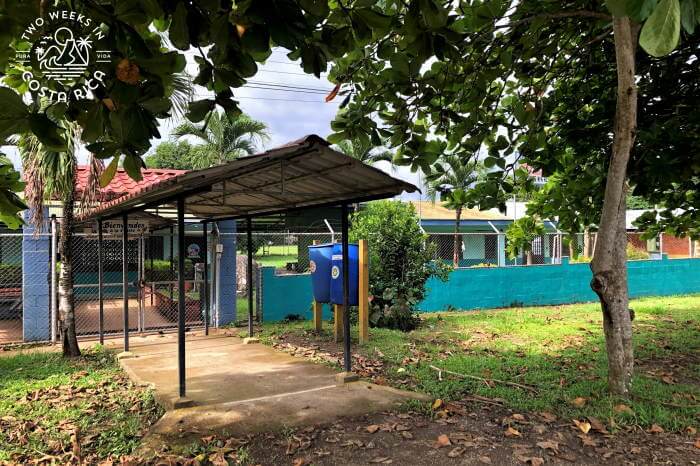
That said, the educational quality varies a lot. Many kids in public school are not in the classroom for very many hours a day. And school is sometimes interrupted for long periods of time during the year. Recently, for a couple of years in a row, the kids did not have school for months at a time when there were countrywide strikes. This time was never made up.
Private School System
Private schools typically offer more stability, a higher quality education, a nicer facility, and more extracurriculars. For that reason, many Costa Ricans and expats living in the country choose to pay to send their kids to private school.
Private schools may be under the authority of the MEP depending on their accreditation, but they still make their own rules for the most part.
During the countrywide strikes, our kids who we have in a private MEP school, still had school. During Covid when there were various shutdowns in the public school system, our kids were in school (either virtually or in person) almost all the time. Private MEP schools work with the MEP on their rules and regulations but still have their independence.
Private School Accreditation
Private schools can be accredited by the MEP and follow the MEP guidelines, academics, and school calendar, or they can be an international school. Some schools are both MEP and international.
International schools follow other standards for academics/curriculum and have their own calendar. They may be accredited by schools in the United States or elsewhere so that credits obtained from these schools will easily transfer.
International schools are popular with expats and others planning to stay in Costa Rica for only a year or two. Kids who go to these schools will be learning the same things as their peers in the US, for example, and will not have to make up a grade when they return to their home country. The credits they receive from the international school will transfer to their school in the US, Canada, etc. as long as the school has the proper accreditation.
School Calendar
MEP Schools
The MEP school calendar typically starts in late January or early February and ends in early December.
Mid-year vacation is in late June/early July and lasts about three weeks.
Most schools give a week off for Semana Santa (Easter Week) and a week or two for Independence Day in September.
MEP schools observe all public holidays in Costa Rica.
International Schools
The school calendar for international schools differs by institution. Most of the private international schools we know of in Costa Rica follow the US calendar. They start in mid-August and end in June.
Uniforms
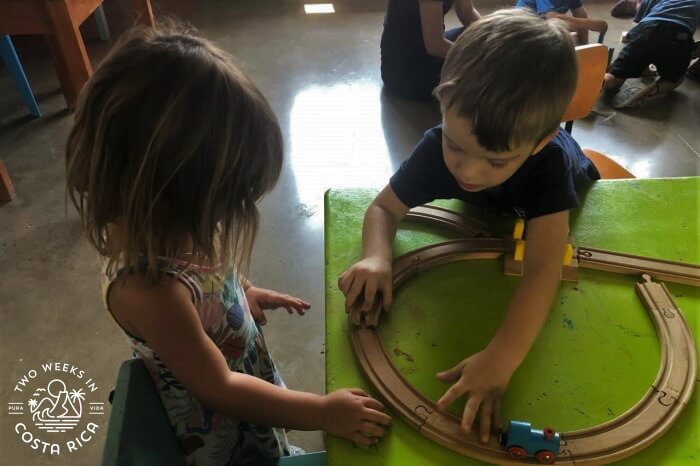
Children at all public schools wear a uniform. Most, but not all, private schools require a uniform as well.
Learning Philosophies at Private Schools in Costa Rica
MEP Schools
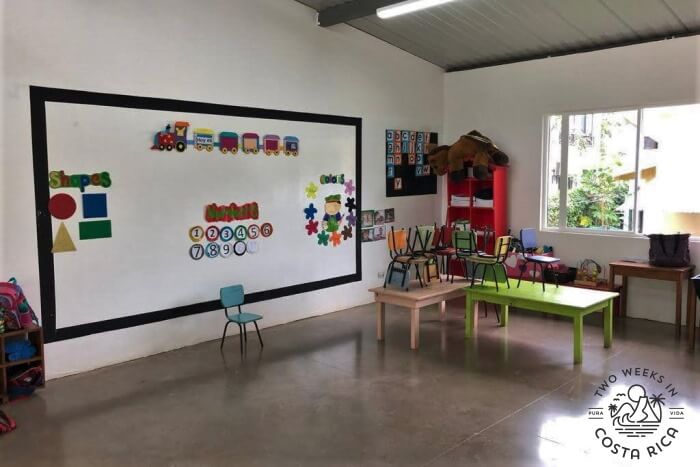
MEP private schools in Costa Rica have a more traditional learning style. Our sons’ school is very curriculum-based. In first grade, they have books for math, phonics (English), and Spanish. English is typically heavily emphasized in private schools because Costa Rican parents want their children to learn English because of the opportunities that brings.
This year, our son’s first grade teacher is from South Africa and speaks English. Spanish is taught as a separate subject. Last year when he was in Preparatory, his teacher was Costa Rican and spoke Spanish. English was taught as a separate subject.
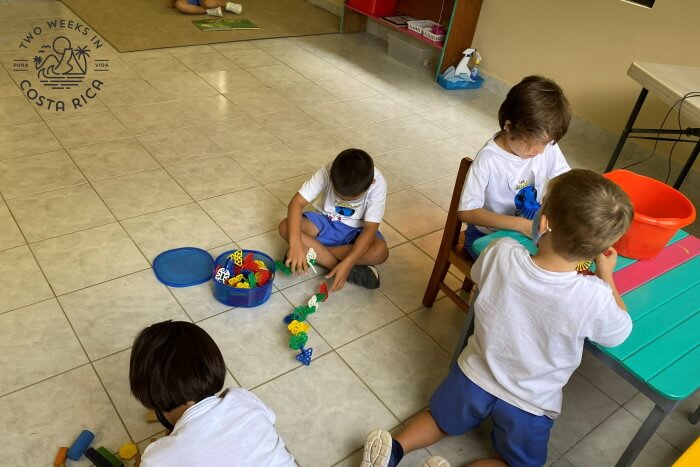
Much of the learning in his class is project-based. They often incorporate art into math and do social studies projects.
In social studies, they learn about Costa Rican culture and history. This is a very important subject. Several times a year, they have events or performances for different holidays that we get to attend.
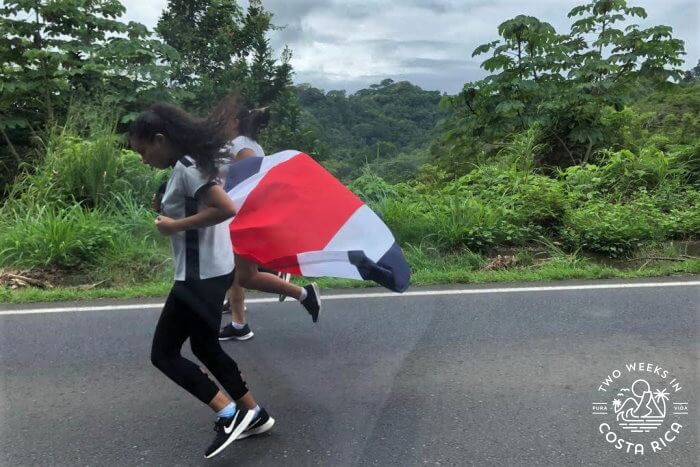
Although they spend much of their time doing academics, they also have garden class, robotics, gym, swim class, and art.
International Schools
The learning philosophies at international schools really vary. You can find more traditional institutions, Montessori schools, German schools, British schools, Christian schools, and even a couple of Waldorf schools.
Some people who are moving to Costa Rica right now are looking for a more alternative lifestyle. To that end, schools have been popping up that do not follow any set of standards or require exams, uniforms, etc.
Costs
The cost of private schools in Costa Rica varies significantly. You can find more basic options starting at $300 per month. The most prestigious institutions are $1,000 or more per month.
Most private schools also charge an annual matriculation fee, which adds significant costs. Typically, matriculation is a one-time fee of around $500-1,000 per year.
Books are an additional fee as well. At our sons’ school, books for preschool are $100-170, and books for elementary and high school are around $450.
Uniform costs also can add up. At our sons’ school, one complete uniform (shirt and shorts) is around $50.
Most private schools give a discount for sending more than one child. The youngest kid usually gets 5-10% off the regular monthly admission.
Conclusion
Costa Rica has many great options for private schools, whether you’re planning to raise your kids here or just come for a gap year. We hope this post gave you some background on what the private schools are like.
Have a question about private schools in Costa Rica? Ask us below.
Looking for more information about living in Costa Rica? Check out these posts:
Private Schools in Costa Rica: Part 2 – List of Options
Costa Rica’s Digital Nomad Visa: Learn about this new visa that lets you stay in Costa Rica for up to two years.
Buying a House in Costa Rica: Overview of our experience buying a home.
Planning a Long-term Visit to Costa Rica: Thinking of coming for an extended stay? Read our tips on choosing where to live, finding a rental, transportation, and more.
