
If you’re like most people, your phone is an important extension of your daily life. And while you may be able to turn off work emails during your vacation, you still want to be able to connect to the internet while abroad. After all, you don’t want to miss posting those gorgeous photos or chatting with family and friends while away. In this post, we’ll give you details on how to get a prepaid SIM card for travel in Costa Rica.
Costa Rica’s Mobile Network
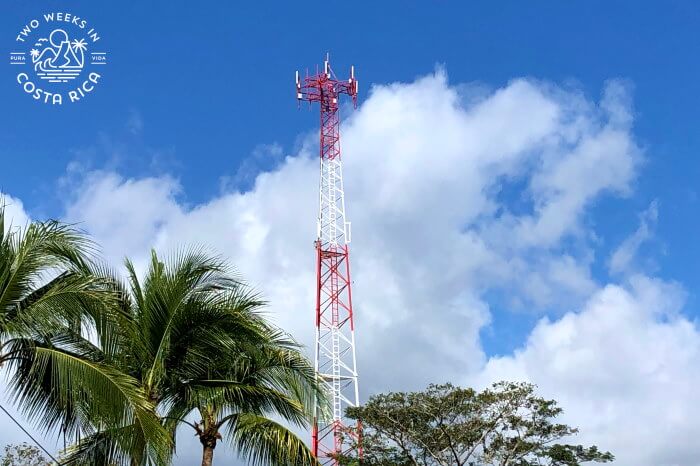
Costa Rica has an extensive network of 3G, 4G, and 4.5G cell phone towers. This allows you to connect to the internet or make a local call in most places around the country.
Of course, with Costa Rica’s rugged terrain, there are still places where the towers don’t reach. They can be partially blocked by mountains or trees. If you are traveling to known tourist destinations, though, you will likely find good coverage.
Major highways and most popular secondary roads usually have good coverage too. However, you’re likely to find some spotty zones along the way.
Important: The mobile networks in Costa Rica will not work if your phone is locked by a cell phone provider in your home country. This is the most common problem people have when trying to insert a foreign SIM card. If you have a contract with a cell phone carrier, contact them first to see if you can get the phone unlocked for international travel. If not, they may be able to offer you a temporary international calling/data plan.
Costa Rica Mobile Providers
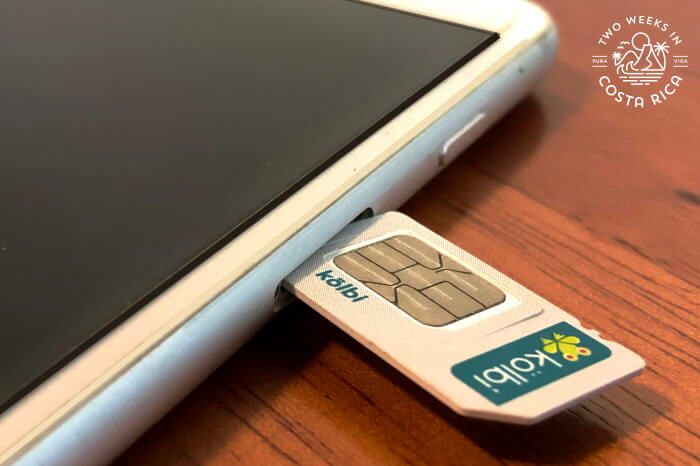
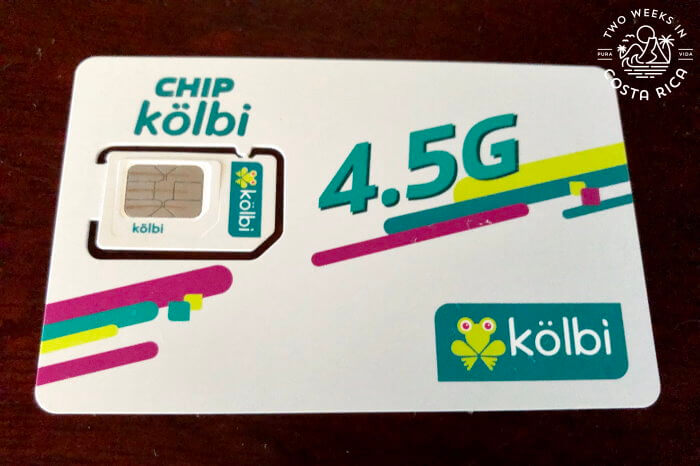
There are several cell phone networks in Costa Rica. The biggest is the government-owned Kolbi. This has the most extensive coverage (see coverage map here) and is also the most popular.
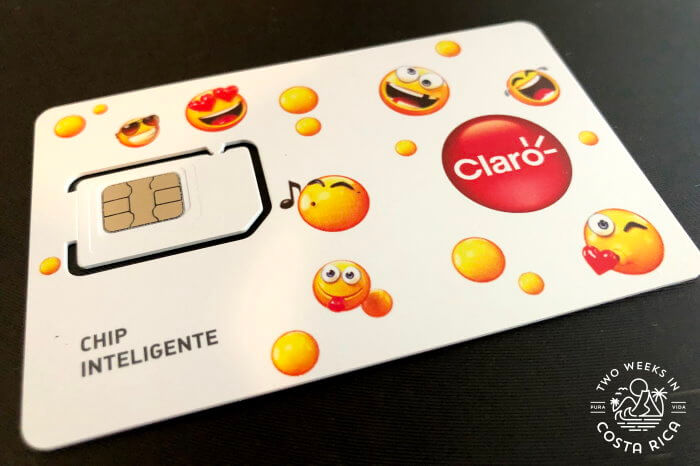
Others that are growing in popularity are Claro and Movistar. These companies have been expanding their coverage but are newer to the market.
Tip: If you will be in Costa Rica for a long-term visit and staying in one place, be sure to ask your host/property manager which company has the best coverage in that area. In some rural areas, for example, Kolbi doesn’t work well, but Claro does. This can be key to getting fast, reliable internet in parts of the country without a cable or fiber option connection.
Prepaid vs. Postpaid SIM Cards
When getting a new SIM card in Costa Rica, there are two options, prepaid (prepago) and postpaid (postpago).
Prepaid SIM cards are the easiest to get and anyone with a passport can buy one.
Prepaid SIMs are sold for around 1,000 colones (about $1.50) plus a certain amount of money for minutes and data. These are pay-as-you-go plans, so once you use the balance, you won’t be able to make calls or use the internet until you recharge it with more money (details below). You can add as much money as you want to a SIM card. It is very affordable. 5,000 or 10,000 colones (about $8 or $16) will last you a long time.
Postpaid SIM cards that give you a certain amount of data and minutes are billed monthly (the month after you use the services). You need to be a legal resident with a cedula or DIMEX card to get one. When doing so, you will sign a contract with the mobile provider.
Getting a SIM Card in Costa Rica
Getting your cell phone set up with a Costa Rica SIM card is easy. Just make sure you are using a phone that is unlocked or allows a dual SIM card. We’ll cover the rest of the process below.
Buying SIM Cards at the Airport
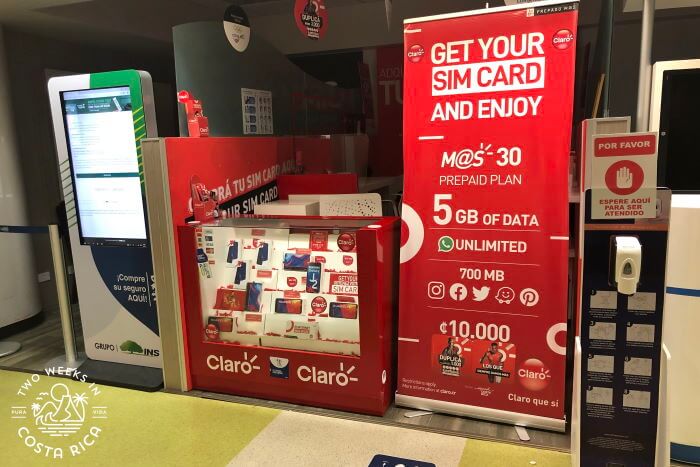
Previously, you could purchase a Kolbi SIM card at either SJO or LIR Airports. However, these desks have since been closed. There is a Claro desk at the baggage claim of SJO Airport, but it isn’t always open.
If you need a SIM card right away, there are some options only a 5 to 10-minute drive from each international airport.
If arriving at SJO Airport, you can go to City Mall in Alajuela (map). It’s about 5 minutes away. Kolbi, Claro, and Movistar all have storefronts inside the mall.
If arriving at LIR/Guanacaste Airport, you can go into downtown Liberia. There is a Kolbi store (map), Claro (map), and Movistar (map) right in town. These are about 10-15 minutes from the airport, depending on traffic.
Where Else to Get a SIM Card?
Besides the locations near the airports, there are plenty of other places to get a Costa Rica SIM card.
ICE Offices
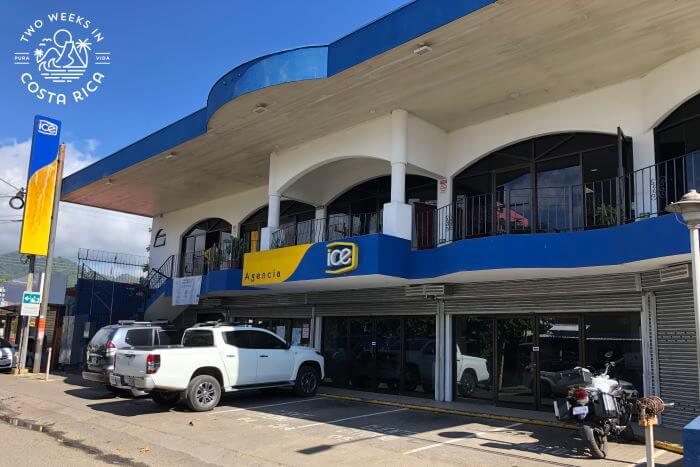
ICE (Instituto Costarricense de Electricidad) is Costa Rica’s government-run electric and telecommunications agency.
They have offices in most larger towns and some rural locations as well. Their buildings are usually white, blue, and yellow. People often go here to pay their electric and phone bills, so sometimes lines are long.
Most ICE offices have staff that will help you set up a new Kolbi SIM card. Kolbi is the mobile provider branch of ICE and is also government run.
Kolbi Retail Locations
In addition to the ICE offices, there are some Kolbi storefront locations around Costa Rica. You can find a searchable list here. You’ll just need to know the province and canton (county) where you are going.
The list will give you both the ICE offices that offer SIMs and Kolbi store locations. Most of the storefronts are in the San Jose area, but there are some random ones around Costa Rica.
Here are a few Kolbi stores worth mentioning, which are near popular tourist destinations:
- La Fortuna (Arenal), right in downtown, across from the Red Cross (Cruz Roja)
- Huacas (on the way to many Guanacaste beaches like Tamarindo and Flamingo)
- Limon on the Caribbean coast (across from the post office, Correos de Costa Rica)
Claro and Movistar Retail Stores
Similar to the Kolbi storefronts, you’ll find retail stores for Claro and Movistar that also sell SIM cards. These are actually more widespread, with locations in many tourist destinations.
You can find the list of Claro stores here and the list of Movistar locations here.
Setting Up Your Costa Rica SIM Card
When you purchase your SIM card, the mobile provider will help set up your phone and test it to make sure it works. They will give you the phone number that corresponds to the SIM so that you can save it.
Each provider is different, but they all have certain packages that include phone minutes, data, and usually some free usage for things like WhatsApp, Waze, and Facebook.
Kolbi, for example, has a tourist package that includes 5GB of internet, 5GB for specific apps (WhatsApp, Instagram, Facebook, and Waze), plus 100 minutes for national calls. The price is 12,000 colones plus 4% VAT. That’s around $20, depending on the exchange rate.
This, along with connecting to Wifi at your accommodations, should be plenty for a short vacation.
Adding More Data/Minutes to Your SIM
If you do run out of data or phone minutes, you can easily add more money to your balance.
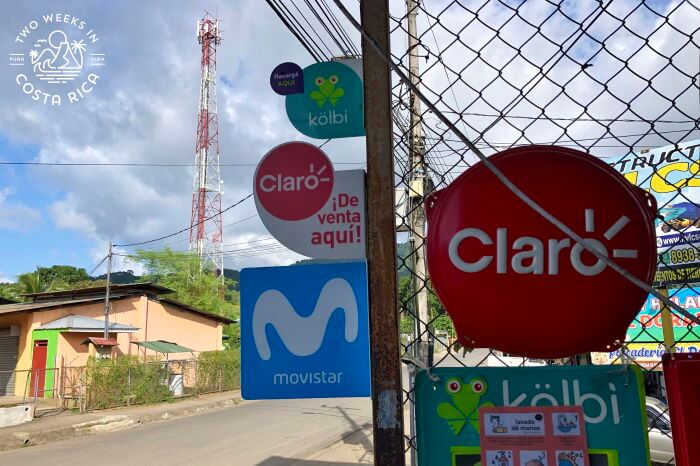
Most grocery stores (also called supers or mini-supers) can either add minutes using their computer or sell you a card with a code to add minutes.
With the card, you need to call the toll-free number and enter some numbers from the back and follow instructions. Cell phone stores (repair shops, accessories, etc.) also usually can help add minutes.
When looking to recharge, just ask if they sell Kolbi, Claro, or Movistar, whichever you have a SIM card for. You can also usually see the logos for each provider either at the register or on a sign outside.
After you have successfully recharged, you will receive a text message with your new balance.
Kolbi users can check their balance by calling *888*1*1#
Conclusion
Getting a SIM card in a foreign country may seem intimidating, but we hope this article has helped you navigate the process. Now that you are connected, you can rest easy and enjoy your trip to Costa Rica!
Have a question about getting a SIM card in Costa Rica or want to share a tip? Leave a comment below.
Looking for more information to help you plan? Check out these posts:
Rental Car Discount – Get a discount on your rental car through Adobe, one of the country’s best companies. Add a Wi-Fi stick too if you think you’ll need even more data for your trip.
Packing for Costa Rica: The Essentials – If you are getting all those final items together, make sure to read this post. It may remind you of something you forgot.
Best Hotels Near SJO Airport – Looking for a comfortable place to stay that doesn’t feel like your typical airport hotel? Check out this handpicked list of our favorites near SJO.
